You've conquered the green circles. You can link your turns down a blue square without panicking. But now you're stuck. The black diamonds look terrifying, moguls feel like a punishment, and carving a clean turn on a groomer still feels like luck more than skill. Welcome to the intermediate plateau. It's where most skiers get comfortable and stop progressing. Breaking through requires a shift in thinking—from just getting down the hill to actively controlling your skis.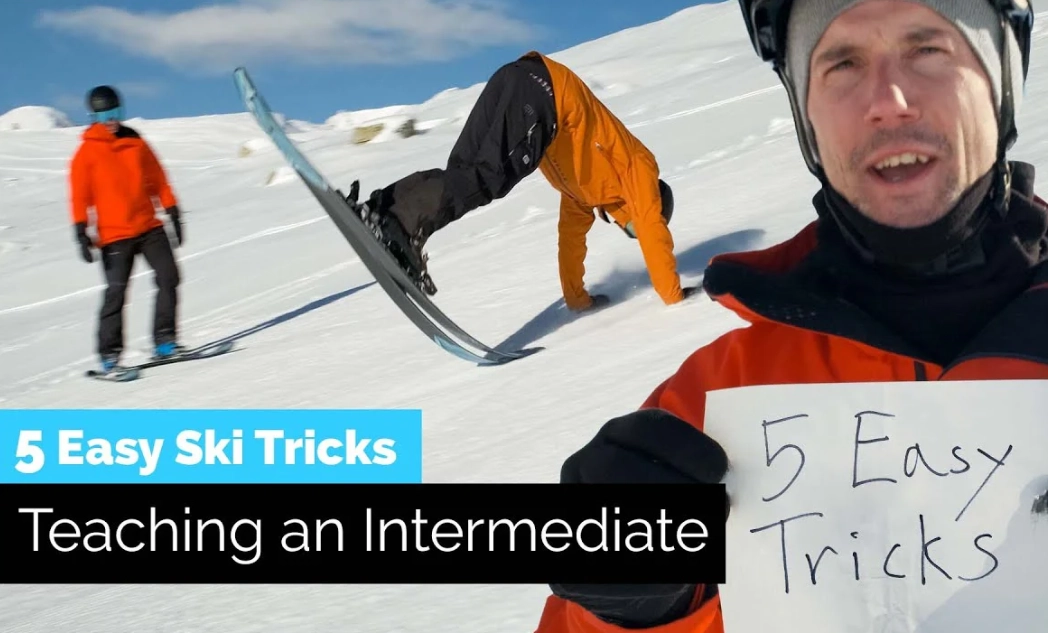
This guide isn't about repeating the basics. It's about the nuanced adjustments that transform a hesitant intermediate into a confident, advanced skier. We'll focus on pressure, edge control, and body positioning in real mountain scenarios.
What You'll Learn
- How to Carve Your Skis Properly (And Why You Might Be Doing It Wrong)
- How to Ski Steep Terrain with Confidence, Not Fear
- A Smart Strategy for Skiing Moguls That Doesn't Burn Your Legs
- First Steps into Powder and Off-Piste
- Does Your Gear Actually Matter Now?
- Your Top Intermediate Skiing Questions, Answered
How to Carve Your Skis Properly (And Why You Might Be Doing It Wrong)
Carving is the holy grail for intermediates. It feels smooth, looks cool, and is incredibly efficient. The common advice is "roll your ankles." That's only half the story. The biggest mistake I see is skiers trying to carve by aggressively twisting their upper body to initiate the turn. This kills your balance.
True carving is about letting your edges do the work. Think of it as a three-phase process:
- Initiate with your knees and ankles: To start a right turn, gently roll your right knee and ankle inward towards the slope. Your upper body should stay quiet and facing downhill. Don't lead with your shoulder.
- Build pressure on the outside ski: As the ski bends and starts to arc, you'll feel pressure build under the foot of your outside (left) ski. This is your platform. 90% of your weight should be here. I tell students to "crush a grape" under that outside foot.
- Finish and release: At the end of the turn, you'll feel the pressure ease. This is the moment to subtly unweight and roll your joints to start the next turn. Don't jump or make a big up motion—it's a gentle release.
A Quick Drill That Works
On a gentle, groomed blue run, try skiing with your hands on your hips. This locks your upper body and forces you to initiate turns with your lower body. You'll feel clumsy at first, but after a few runs, your turns will become cleaner and more powerful. It's the fastest way to break the upper-body rotation habit.
If you hear a loud, constant "shhh" sound, you're skidding. If you hear a quieter, crisp "zzz" sound and see two clean lines in the snow behind you, you're carving. Aim for the latter.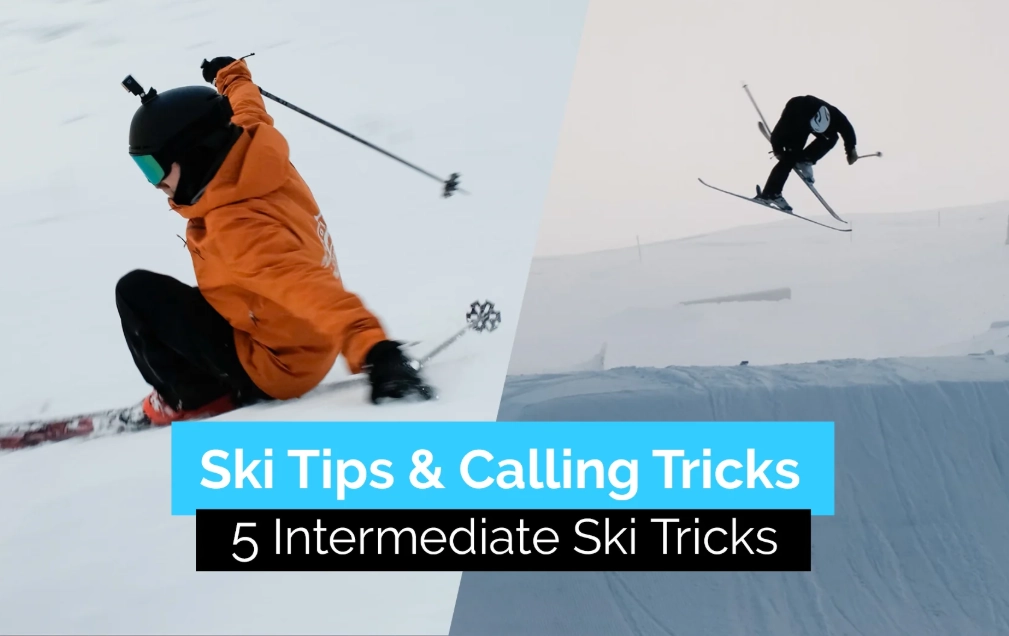
How to Ski Steep Terrain with Confidence, Not Fear
Fear on steeps usually comes from one place: feeling like you're going to accelerate out of control. Your natural reaction is to lean back and make defensive, skidded turns. This is exactly what makes you lose control. Leaning back puts your weight on your ski tails, which are designed to go fast and straight—not help you turn.
The counterintuitive truth: to control speed on a steep slope, you must commit your weight forward. You need the shovel of your ski (the front part) to bite into the snow to initiate a turn.
| Common Mistake on Steeps | The Better Approach |
|---|---|
| Leaning Back (In the "Backseat"): Weight on heels, skis feel unstable, hard to turn. | Aggressive Forward Stance: Ankles flexed, shins pressing on boot tongues. Feel your toes. |
| Looking Down at Your Skis: This pulls your weight down the hill and destroys balance. | Look Across the Hill: Pick a spot or tree at the side of the run where you want to go. Your body will follow. |
| Making Huge, Sweeping Turns: Exposes you to the fall line for too long, building speed. | Short, Pivoty Turns: Use quick leg rotations to pivot skis across the fall line. Control is in the rhythm. |
| Stiff, Straight Legs: No shock absorption, every bump throws you off. | Actively Absorbing Terrain: Think of your legs as springs. Bend and extend to stay in contact with the snow. |
Practice this on a moderately steep blue run first. Before you drop in, mentally rehearse: "Shins forward, look across, quick turns." Take a breath, then go. The first two turns are the hardest. After that, rhythm takes over.
A Smart Strategy for Skiing Moguls That Doesn't Burn Your Legs
Most intermediates hate moguls because they approach them like a groomed run. They try to carve each turn and fight the bumps. You'll be exhausted in 30 seconds. Mogul skiing is about absorption and using the terrain to your advantage.
Forget about linking perfect carved turns. Think of it as a four-part rhythm:
- The Absorption: As you approach the top of a mogul, bend your knees deeply to absorb the bump. Let the mogul come up to you.
- The Pivot: At the very top (the crest), that's your moment of least pressure. Quickly pivot your skis to point downhill or across the hill using your feet and lower legs.
- The Extension: As you slide down the backside of the mogul into the trough, straighten your legs to extend into the next turn.
- Repeat Immediately: The next bump is already there. Re-bend and absorb.
Your upper body should remain as quiet as possible, facing straight down the fall line. Your legs are doing all the work, moving up and down independently like pistons. A great piece of advice from the Professional Ski Instructors of America (PSIA) is to imagine a fixed pole running from your head down your spine—your torso rotates around this pole, but doesn't swing side to side.
Start on a run with small, spaced-out moguls. Don't aim for a perfect line. Just focus on the absorb-pivot-extend rhythm. Speed is actually your friend here—too slow and you'll get stuck in the troughs.
Picking Your Line: The Zipper Isn't the Only Way
You always see experts flying straight down the "zipper line" (the fall line directly over each mogul crest). That's advanced. As an intermediate, look for the "smooth line." This means skiing slightly across the mogul field, using the troughs and the smoother snow on the sides of the bumps. You'll make fewer turns, conserve energy, and build confidence. There's no shame in taking the easier route.
First Steps into Powder and Off-Piste
Your first time in deep snow can be magical or miserable. The key difference from groomed snow is that you need to unweight both skis simultaneously to turn. On a groomer, you shift weight from one ski to the other. In powder, you need to "pop" or float both skis to re-direct them.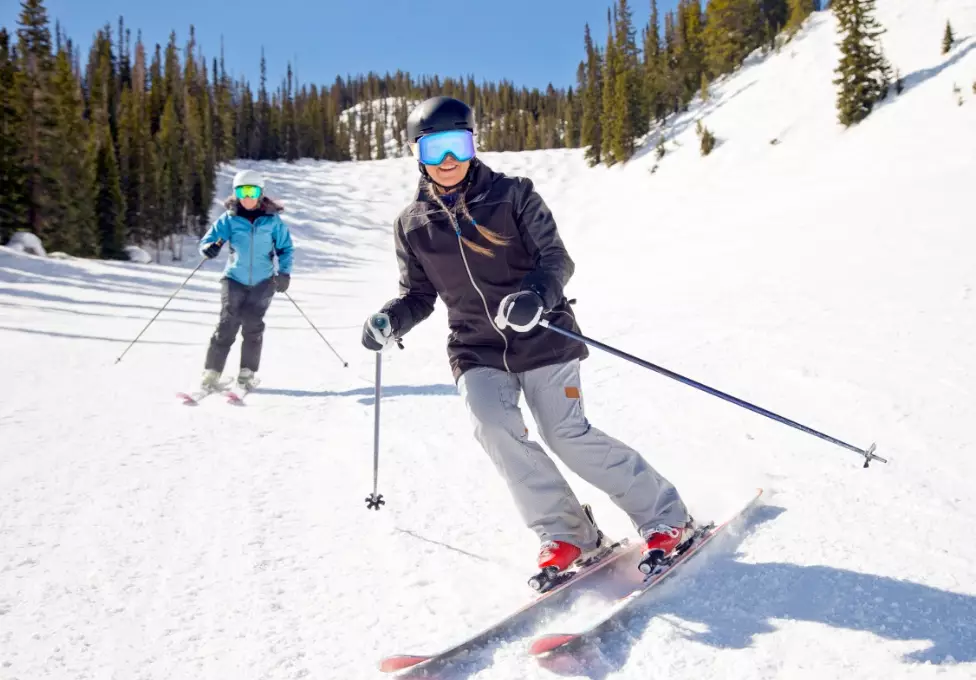
Here's how to approach it:
- Wider Stance: Keep your feet hip-width apart for better stability and to keep ski tips from crossing.
- Stay Centered: Don't lean back! A neutral, balanced stance is best. If anything, a slight forward pressure helps keep the tips up.
- Two-Footed Steering: Initiate turns by rotating both legs together, like you're steering a big wheel. Imagine your skis are one big platform.
- Start Small: Find a few inches of fresh snow on the side of a groomed run. Practice making turns where you feel the resistance. Then move to a low-angle, untracked powder field.
Powder skiing is tiring in a different way. It's less about muscle burn and more about the constant, subtle balance adjustments. Take breaks and enjoy the feeling—it's why we ski.
Does Your Gear Actually Matter Now?
When you were a beginner, any rented ski would do. Now, your equipment can help or hinder your progress. You don't need the most expensive gear, but you do need the right type.
Ski Choice: Consider moving to an "all-mountain" ski with a waist width between 85mm and 100mm. These are versatile enough for groomers but have enough float for a bit of powder. Avoid super-stiff, racing-oriented skis—they're unforgiving. A ski with some rocker (upturned tip) will make initiating turns in variable snow much easier.
Boots Are Everything: This is non-negotiable. Ill-fitting rental boots will hold you back more than anything else. If you ski more than a week a year, invest in a professional boot fitting. A good boot fitter will analyze your foot shape and skiing style. The right boot should be snug, not painful, and give you immediate, precise control over your skis. It's the single best upgrade for an intermediate skier.
Tuning: Dull edges won't hold on ice or hardpack. Learn to feel your edges. If you're slipping sideways when you think you should be gripping, it's probably time for a sharpening. A basic wax job makes skiing easier and faster.
Your Top Intermediate Skiing Questions, Answered
How do I stop my legs from burning so fast on long runs?
Leg burn is usually a sign of using the wrong muscles—you're static and holding a position. Focus on dynamic movement. Instead of holding a deep squat, constantly make small up-and-down movements with your legs to absorb terrain. Let your skeleton, not just your quads, support your weight. Also, check your stance. If you're in the backseat, your quads are working overtime to keep you from falling forward. Get your weight forward and the burn often lessens.
I can ski blues fine, but I panic and freeze at the top of a black diamond. What should I do?
This is 90% mental. First, scope the run from the side or bottom. Pick a specific, non-intimidating line—like following a set of existing tracks or skiing the less-steep area near the edge. Before you push off, take three deep breaths and say your plan out loud: "Okay, I'm going to make ten short turns to that tree, then stop." Commit to that small goal. The first three turns are the mental hurdle. After that, you're just skiing. If you fall, it's okay. Everyone falls.
Should I take another lesson, or can I figure it out on my own?
A lesson is almost always worth it. The intermediate plateau is full of subtle, hard-to-self-diagnose issues. A certified instructor (look for PSIA/AASI certification) can spot the one thing you're doing wrong in five minutes, saving you a season of frustration. Be specific with them: "I want to feel more stable on steeps" or "I want to learn a basic mogul rhythm." Group lessons for intermediates can be fantastic because you learn from others' mistakes too.
How important is fitness for intermediate skiing?
It's a game-changer. Skiing is a sport. Off-season leg blasters (lunges, squats), core work, and cardio will let you ski longer, recover faster, and have the strength to hold proper form when you're tired. The best skiers I know treat the offseason as training season. You don't need to be a gym rat, but 20-30 minutes of targeted exercise a few times a week makes a huge difference in your comfort and progression on the hill.