You're staring at a mountain of fresh powder, your friends are arguing, and you're stuck in the middle of the oldest winter sports debate: skiing or snowboarding? Everyone has an opinion, usually a loud one. The skiers say it's more elegant. The snowboarders say it's cooler. But what does that mean for you, standing there renting gear for the first time? Let's cut through the noise. I've spent over a decade teaching both, and I've seen the good, the bad, and the spectacularly wipeouts. This isn't about which is objectively "better." It's about which is better for you.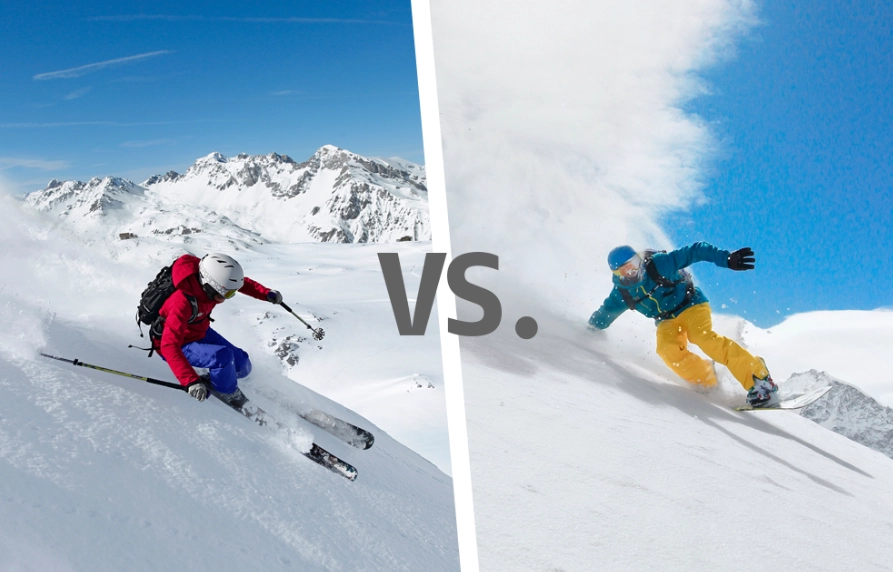
What's Inside This Guide
The Core Differences at a Glance
Before we dive deep, here's the cheat sheet. This table sums up the fundamental contrasts that shape the entire experience.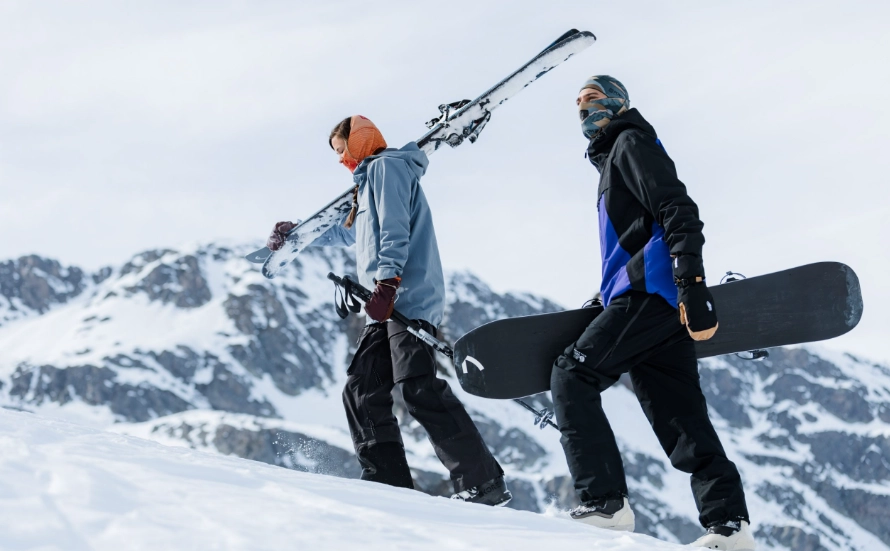
| Aspect | Skiing | Snowboarding |
|---|---|---|
| Stance & Movement | Feet are independent, facing forward. Movement is more lateral and relies on edges of two separate skis. | Feet are fixed sideways on one board. Movement is more rotational, using the heel and toe edges of a single platform. |
| Initial Learning | Easier to stand and make basic maneuvers (snowplow). Harder to master parallel turns. | Harder to stand and balance initially. Frustrating "falling leaf" phase. Easier to progress to linked turns once basics are down. |
| Getting Around | Easier on flat areas and cat tracks. Poles help with propulsion. Walking in ski boots is awkward but manageable. | Annoying on flats (often requires unstrapping one foot). No poles. Walking in snowboard boots is relatively comfortable. |
| Typical Falls | More frequent, but often less severe. You can tumble and pop back up. | Less frequent, but often harder. Catching an edge can slam you down with force, especially on wrists and tailbone. |
| Equipment | More pieces (2 skis, 2 poles, 2 boots, bindings). Heavier to carry. More finicky to put on. | Fewer pieces (1 board, 2 boots, bindings). Lighter and easier to carry. Strap-in process can be tedious in deep snow. |
That's the skeleton. Now, let's put some meat on the bones.
The Learning Curve Myth (And Reality)
The biggest piece of misinformation out there is the simple "skiing is easier to learn, harder to master; snowboarding is the opposite." It's not wrong, but it's dangerously incomplete.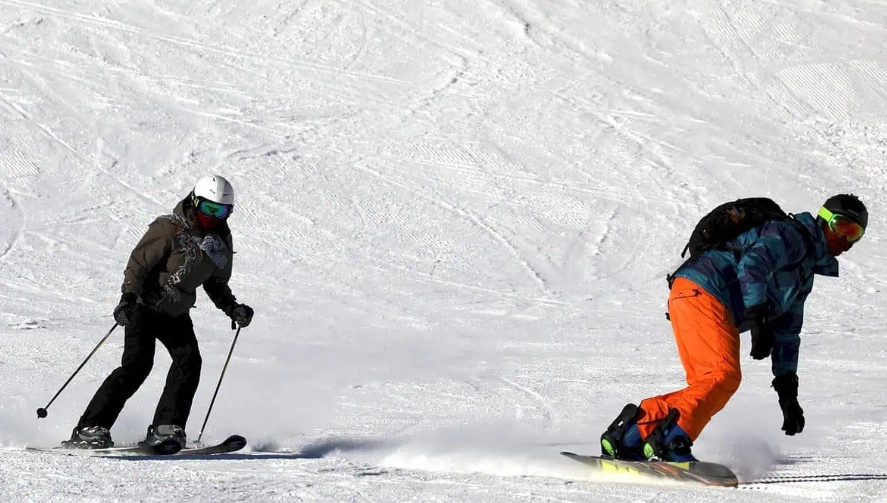
Here's the nuance most instructors see but rarely talk about: Skiing has a gentler introduction but a steeper middle hill. On day one, you can do the pizza wedge (snowplow) and get down a green run without dying. It feels like progress. The real wall comes when you need to shift from that wedge to parallel skiing. That transition requires un-learning some bad habits and developing independent leg control that doesn't come naturally. It's a plateau that frustrates many into quitting.
Snowboarding has a brutal, painful wall right at the start. Your first two days will likely involve sitting on your butt a lot. You're learning to balance on a single edge, and your body fights it. You'll spend hours sliding sideways (the "falling leaf") feeling like you're getting nowhere. This is the infamous "pain wall." But here's the secret: once you push through that and learn to link your first heel-side and toe-side turns, the progression curve skyrockets. Going from intermediate to advanced feels more intuitive for many.
What About Age and Fitness?
I get this question all the time. "I'm 40, am I too old to start snowboarding?" Absolutely not. But your priorities shift.
Skiing can be kinder to older joints in the initial stages because the falls are generally less impactful. The use of poles also helps with stability, which builds confidence. However, the torsional strain on knees during advanced skiing is significant. According to a report by the International Ski Federation's Injury Prevention group, knee injuries account for about 30% of all skiing injuries.
Snowboarding's early falls are harder on wrists, tailbones, and shoulders. Wrist guards are non-negotiable for beginners. Once you're past the beginner stage, snowboarding can be lower impact on the knees, but harder on the ankles and hips. It demands more core strength for rotational control.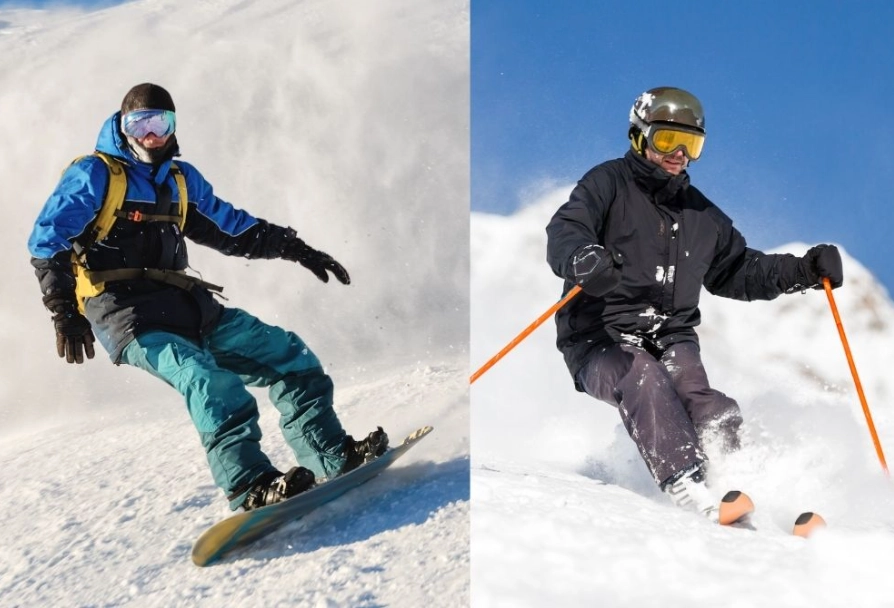
Gear & Cost: What You'll Actually Spend
Let's talk money, because this influences decisions more than people admit. The cost difference isn't massive, but the type of cost and hassle varies.
Skiing Gear: You're dealing with more components. A full setup (skis, bindings, boots, poles) will run you similar money to a snowboard setup. Where skiing gets you is in the baggage. It's heavier, bulkier, and more awkward to travel with. Boots are the big one. A good ski boot is a rigid, custom-fitted plastic shell. It's incredibly uncomfortable to walk in for more than 5 minutes, but crucial for performance. Renting is straightforward, but getting a proper boot fit is an art form. A poorly fitted ski boot will ruin your day faster than anything.
Snowboarding Gear: The board and bindings are one compact unit. The boots are soft, like bulky hiking boots, and you can comfortably walk in them from the lodge to the lift. This is a huge, underrated advantage. The hassle factor is lower for travel and resort navigation. The initial rental process is simpler—fewer adjustments. However, the American Association of Snowboard Instructors emphasizes that binding stance (the angle of your feet) is critical for comfort and control, something rental shops often set generically.
For a mid-range, new setup ready for the slopes, budget around:
- Skiing: $800 - $1200 (Skis: $400-$700, Boots: $250-$450, Bindings: $150-$250, Poles: $50-$100)
- Snowboarding: $700 - $1100 (Board: $350-$600, Boots: $200-$350, Bindings: $150-$250)
Lessons and lift tickets cost the same. The real financial divergence happens later with specialization (e.g., backcountry touring setups).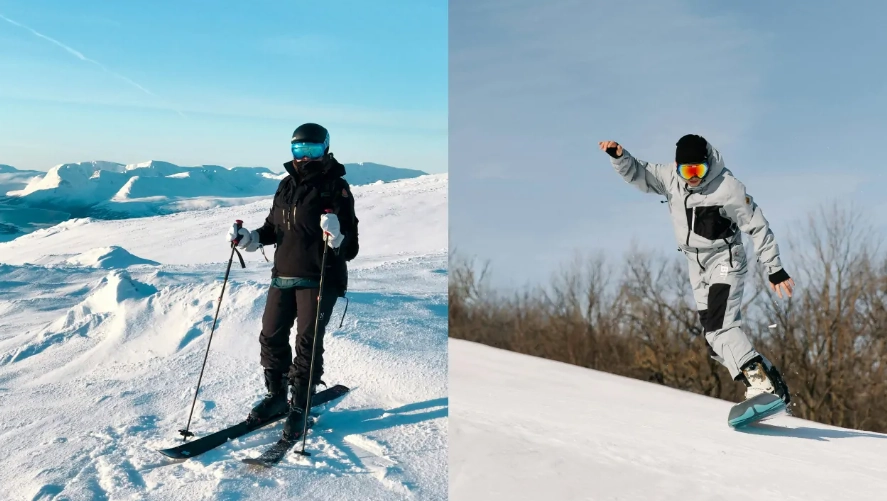
Where Each Sport Shines: Terrain Matters
Not all mountains are created equal, and neither are the sports. Your local hill's layout might make this decision for you.
Skiing's Terrain Advantages:
Skis excel in variable, choppy conditions and on hardpack (icy) snow. The independent legs act like suspension, absorbing bumps. They are objectively superior for traversing flat sections and cat tracks—you just pole along. If your mountain requires long, flat traverses to get to the good stuff, skiing saves you energy and frustration. Moguls (those bump runs) are a traditional ski domain, though they require advanced skill.
Snowboarding's Terrain Advantages:
Deep powder snow is where snowboarding earns its reputation for pure, floating joy. The single board planes on top of the snow in a way that feels magical. Terrain parks are a natural home for snowboarding; the culture originated there. Riding rails, hitting jumps—the board feels like an extension of your body for freestyle. On steep, wide-open groomers, a skilled snowboarder can lay down epic, carving turns that feel incredibly smooth.
The pain point? Icy, steep mogul runs are a snowboarder's nightmare. It's a survival mission, not a fun run.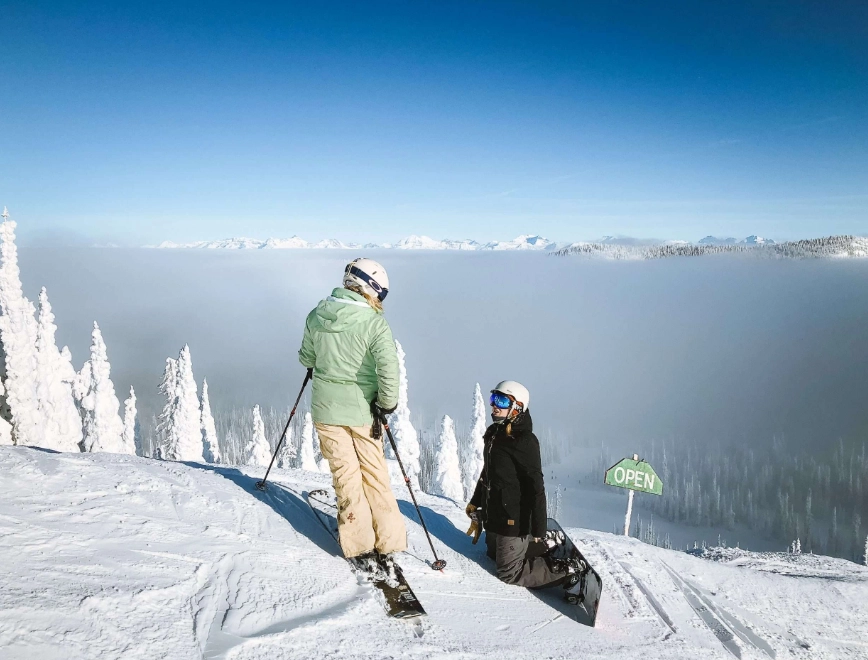
The Culture & Vibe: It's a Real Thing
You can't ignore this. Walk into a mountain lodge and you can often spot the skiers and snowboarders by more than just their gear.
The skiing culture tends to be more… traditional. It's older, often associated with alpine racing, precision, and a certain formality. The snowboarding culture, born in the 80s and 90s, is rooted in skate and surf culture. It's more casual, with a focus on creativity, style, and individual expression.
This is softening a lot. You see park skiers with the same baggy pants as snowboarders, and you see snowboarders who are all about high-speed carving. But the residual vibe matters. Do you want the classic, technical feel of skiing, or the laid-back, expressive feel of riding?
Honestly, the best mountains have a great mix of both. The tribalism is mostly online. On the hill, everyone is just trying to have fun.
How to Choose: A Decision Framework
Stop overthinking it. Ask yourself these questions in order.
1. What's your primary goal for the season?
- "I have a family ski trip, I just want to get down the mountain safely and have fun with everyone." → Leaning Skiing. The initial ease and mobility help keep up with groups.
- "I want to learn tricks and hit the terrain park." → Leaning Snowboarding. The learning curve aligns with this goal.
- "I love the feeling of surfing on snow and deep powder." → Leaning Snowboarding.
- "I want to explore the whole mountain, including off-piste and variable conditions." → Leaning Skiing (initially).
2. What's your pain tolerance and fear level?
If the idea of repeated hard falls in the first days sounds awful, skiing's gentler start might keep you from giving up. If you have weak wrists or a bad tailbone, consider this heavily. If you're more afraid of long, tricky progression plateaus, snowboarding's "hard start, fast later" might suit you.
3. What does your gut say when you watch videos?
Seriously, this matters. The sport that gives you a little thrill when you watch it is the one you'll stick with. Passion overcomes practical hurdles.
My final, non-consensus advice: Try both. Rent gear for a day each. Take a beginner lesson for each. The cost of two days of rentals and lessons is cheaper than committing to the wrong sport and having a miserable season. Your body will tell you which one feels more natural surprisingly quickly.