
My first long trail run packing list was a mess. I carried a full rain shell, two liters of water, and enough snacks for a small family on a three-hour loop. By the last climb I hated every item in that pack. That run taught me more than any gear review ever did: a long trail run packing list should solve problems, not create them.
The useful version of that list changes with distance, weather, and whether there is water on course. What follows is the setup I now use for runs from four to eight hours in the mountains, based on ten years of ultras and a lot of bad packing decisions.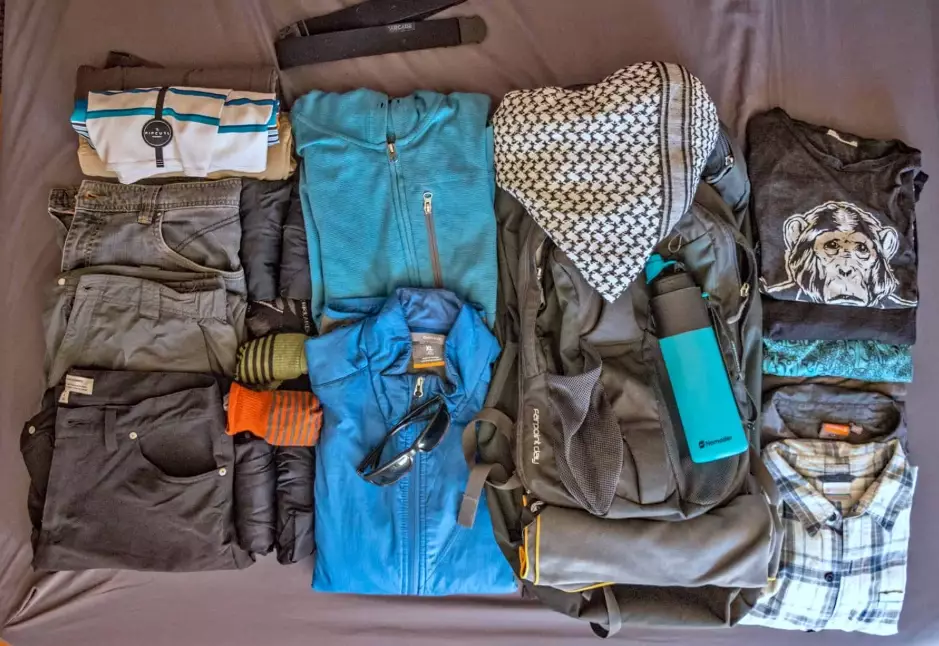
Quick route through this guide
The Core Long Trail Run Packing List
This is the list I would hand to someone heading out for a long mountain run with no crew. It covers safety, fuel, and the small repair items that save a day.
| Item | Example spec | Why it earns a spot |
|---|---|---|
| Running vest (8–12 L) | Salomon ADV Skin 12 | Carries water high on the chest, stays stable on descents |
| Soft flasks | 2 × 500 ml | Easy refills at streams, less sloshing than bottles |
| Filter | Sawyer Squeeze or Katadyn BeFree | Lets you drink from natural sources and cuts carried water weight |
| Calories | 200–300 cal per hour of running | Solid food early, gels later; prevents the bonk |
| Light shell | 100–150 g windproof packable jacket | Wind and light rain above treeline |
| Emergency layer | Thin fleece or Alpha Direct top | Stops shivering if you slow down or stop |
| Phone + offline map | GPX file loaded in advance | Navigation backup when signs vanish |
| Headlamp | 200 lumens minimum | Day runs finish after dark more often than planned |
| Mini first aid | Blister plasters, tape, ibuprofen | Fixes the two problems that end runs: feet and pain |
| Emergency blanket | Foil bivvy, 60 g | Weighs nothing, matters if you are stuck with an injury |
Two items on that table cause the most debate. The filter looks unnecessary on a route with taps, but mountain taps can be spaced far apart. The emergency layer feels like overkill on a hot day until a storm drops the temperature ten degrees in fifteen minutes.
Detail from the trail: I now pack calories by time, not by feel. A five-hour run gets roughly 1,200 calories split into real food for the first three hours and gels for the last two. Solid food early sits better in my stomach on climbs.
Why Pack Weight Is the Mistake Most Runners Miss
New trail runners focus on what to bring. Experienced runners focus on what to leave. Every 100 grams in the pack costs energy on every climb, and that cost compounds over hours.
I made this mistake on a 30 km ridge run. I packed a heavy waterproof jacket, a camera, a spare pair of socks, and a large water bottle. The pack bounced on the descents, my shoulders ached, and I drank less because the heavy bottle was awkward. The run took an hour longer than planned.
The fix is a simple target: for a day run under eight hours, keep total pack weight (including water and food) under about 10 percent of body weight. For most runners that means a pack around 3–5 kg fully loaded. If you are above that, look for the heaviest item first, not the most expensive one.
What to Check Before You Leave
- Weight test: stand on a scale with the loaded pack, then without it.
- Bounce test: jog fifty meters. Anything that swings gets tightened or removed.
- Reach test: can you get water, a gel, and your phone without stopping? If not, repack.
The American Ultrarunning Association and many race organizers publish mandatory gear lists. Those lists set the minimum for races, but a solo training run with no support often needs more safety margin, not less.
How to Adjust the List for Distance and Weather
The same list does not fit a four-hour run and a full-day mountain push. Here is how I shift it.
| Run length | Water carried | Extra layer | Food |
|---|---|---|---|
| 3–4 hours | 1 L | Light shell only | 2–3 items |
| 5–6 hours | 1.5 L plus filter | Shell and thin fleece | 4–5 items |
| 7–8 hours or more | 2 L plus filter | Shell, fleece, emergency blanket | 6–8 items plus backup gel |
Weather changes the list faster than distance does. A cold wind above the treeline can turn a mild day into a shivering problem. On exposed routes I add a hat and gloves even in summer. In hot, dry conditions the filter matters more than the extra layer, because dehydration ends runs faster than cold.
Scenario: a 25 km alpine loop with two stream crossings and a forecast of afternoon storms. My pack holds 1.5 liters, a filter, a windproof shell, a thin fleece, a headlamp, foil blanket, and roughly 900 calories. Total weight around 4 kg. The stream crossings make the filter the most important item on the list.
Gear I Stopped Carrying on Long Trail Runs
Some gear feels smart at home and becomes a burden on the trail. These are the items I now leave behind, and the reason for each.
- Heavy waterproof jacket: a full hardshell is often too warm and too heavy for running. A light windproof shell plus a fleece covers most summer mountain conditions.
- Backup shoes: extra weight and bulk. If shoes fail, tape fixes them long enough to finish.
- Large water bottle: sloshes, bounces, and adds weight. Soft flasks in a vest work better.
- Camera separate from phone: one device does both jobs and saves weight.
- Too many snacks: extra food is wasted weight if you do not eat it. Pack to your hourly calorie target, not your appetite at the trailhead.
The one item I never drop is the emergency blanket. It costs almost nothing in weight and covers the worst case: an injury that leaves you waiting for help in cold wind.
Long Trail Run Packing List Questions
What should I carry for a 6-hour trail run with no water on course?
Carry a filter and plan refills from natural sources rather than hauling all your water at the start. One liter on the body plus a filter weighs far less than three liters carried from the trailhead. Check stream locations on your map before you leave, and carry a backup 500 ml flask in case a source is dry.
How do I keep my pack from bouncing on long descents?
Tighten the sternum strap and the side compression straps, then move soft items to the bottom of the pack. Heavy items should sit close to your back, not in the outer pockets. If the pack still bounces, it is probably too large for the load, and a smaller vest will do better.
Is a headlamp really necessary on a day run?
More often than people expect. A twisted ankle or a wrong turn can push a finish past sunset. A 200-lumen headlamp weighs around 60 grams and removes the biggest risk of a day run becoming a night rescue.
What food works best late in a long trail run?
Gels and chews are easier to eat when your stomach turns against solid food. Keep one solid item for the final hour if you can tolerate it, but do not force it. The mistake is packing only solid food for a run over five hours.
This guide is based on personal trail running experience and standard safety guidance from race organizers and ultrarunning associations. Gear choices should be adapted to your route, weather, and experience level.