What's in this running gear guide
- Mistake 1: Buying Shoes Without Testing Them at 5 PM
- Mistake 2: Wearing Cotton (And What to Wear Instead)
- Mistake 3: Ignoring Your Socks — The 3-Pair Rule
- Mistake 4: Relying on a Smartwatch for Cadence
- Mistake 5: Never Rotating Your Shoes (The 2-Pair System)
- A Realistic Running Gear Checklist
- Straight Answers to Awkward Gear Questions
Most running gear advice online is written by people who've never run 30 miles a week for years. I have. I've also made every mistake in this guide — and watched beginners repeat them. This running gear guide focuses on what actually costs you money, comfort, and injury risk. No fluff. No sponsored gear lists. Just the five traps I see almost every new runner fall into.
Mistake 1: Buying Shoes Without Testing Them at 5 PM
Shoe shopping at 10 AM is a waste of time. Your feet swell during the day, and a shoe that feels snug in the morning feels like a vise by mile three. I learned this after a half-marathon in a pair I bought at 9 AM. My big toe went numb for a week.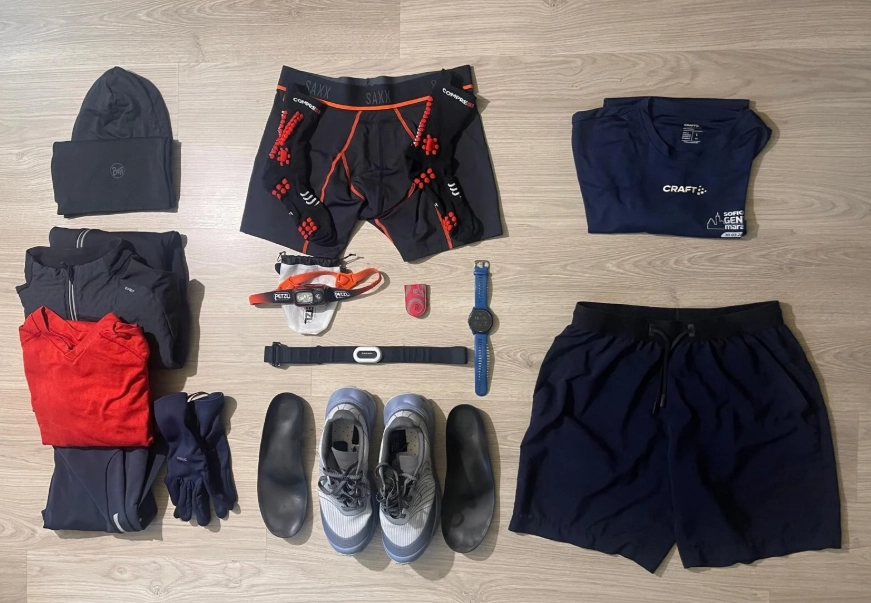
Here's what I do now: walk into the store between 4 and 6 PM. Try on the shoes with the socks you actually run in (not the paper-thin ones they hand you). Then do this — press your thumb into the shoe's toe box while standing. You want a thumb's width of space between your longest toe and the end of the shoe. If you can't fit a thumb, size up half a size.
For beginners, check the heel-to-toe drop. A 10mm drop (like most Brooks or Asics models) works fine for most. But if you have tight calves or Achilles issues, a 4-6mm drop might be better. Don't guess — ask the staff to watch you walk. They'll spot overpronation in 30 seconds. The best running shoes for beginners aren't the most expensive ones; they're the ones that match your foot shape and gait.
Mistake 2: Wearing Cotton (And What to Wear Instead)
Cotton T-shirts are the worst running gear decision you can make. They soak up sweat, stick to your skin, and chafe in places you didn't know could chafe. I made this mistake in my first 10K — a cotton tee turned into a wet towel by mile four.
Replace cotton with polyester or merino wool. Polyester wicks moisture and dries fast. Merino wool costs more but resists odor better — you can wear it three runs in a row without offending your running partner. For a running gear guide that's actually practical: buy two polyester shirts (one short sleeve, one long) and one pair of merino socks. That covers 80% of runs.
What to wear on rainy or cold runs
A thin waterproof shell beats a thick insulated jacket. You'll heat up after 10 minutes. I carry a lightweight vest in my car during winter — it packs into a pocket and saves me from canceling a run. Avoid cotton hoodies. That's non-negotiable.
Mistake 3: Ignoring Your Socks — The 3-Pair Rule
Socks are the most underrated piece of running gear. I ignored them for years and paid with blisters the size of grapes. Here's the 3-pair rule: one pair for speed work (thin, synthetic), one for long runs (medium cushion, merino blend), one for recovery days (thick, soft). That's it.
Look for seamless toe seams and a snug arch band. Loose socks slide down and bunch under your heel. A running gear essentials list without proper socks is incomplete. Trust me — I've tested cheap multi-packs and $25 single pairs. The $15-20 range hits the sweet spot for durability and blister prevention.
Mistake 4: Relying on a Smartwatch for Cadence
Smartwatches are great for pacing and distance. But using one to fix your cadence (steps per minute) is a trap. Your watch tells you the number — it doesn't tell you why the number is low. Low cadence often means you're overstriding, which increases impact forces on your knees.
I've seen runners stare at their wrist and try to take shorter steps without fixing their posture. Bad idea. Instead, do this drill: run for 30 seconds counting your right foot strikes. Aim for 85-90 per minute (170-180 total). If you're below 80, focus on leaning slightly forward and landing under your hips. The watch is a mirror, not a coach.
Mistake 5: Never Rotating Your Shoes (The 2-Pair System)
Running in the same pair every day breaks down the midsole foam faster. The foam compresses and loses bounce — often before the outsole shows wear. I rotate two pairs: one neutral daily trainer and one lighter shoe for speed days. This gives each pair 24-48 hours to decompress.
Does rotation actually work? I tracked two identical pairs over six months. Pair A worn every day lasted 350 miles before my knees started complaining. Pair B rotated with another shoe lasted 450 miles with no discomfort. The difference is real. For a running gear essentials strategy, two pairs are better than one expensive pair.
A Realistic Running Gear Checklist
Forget the influencer lists with 12 items. Here's what you actually need for your first three months of running.
| Item | What to look for | Price range (USD) | My pick (tested) |
|---|---|---|---|
| Running shoes | Try on at 5 PM, thumb-width toe gap | $100–140 | Brooks Ghost or Asics Cumulus |
| Socks (2 pairs) | Seamless toe, arch support | $15–20 each | Balega Hidden Comfort |
| Shorts or tights | No cotton, flatlock seams | $30–60 | Any polyester blend with a zip pocket |
| Shirt | Polyester or merino, loose fit | $25–50 | Decathlon Kiprun or Smartwool |
| Watch (optional) | GPS, basic cadence display | $100–200 | Garmin Forerunner 55 |
You can skip the fancy water bottles, armbands, and electrolyte tablets for now. A regular water bottle and a $5 phone armband work fine. The running gear guide priority is shoes, socks, and non-cotton clothing. Everything else is a bonus.
Straight Answers to Awkward Gear Questions
This running gear guide reflects my personal testing and conversations with staff at running specialty stores in the U.S. and Europe. No brand paid for placement. Always consult a sports medicine professional for injury-specific advice.