Jump to what you need most
The first time I ran a proper trail, I wore road shoes, carried a single 500ml bottle, and thought my marathon fitness would carry me through. Three miles in, I was slipping on wet roots, my quads were screaming, and I drained that bottle by mile four. That humbling day taught me more than any training plan — and these trail running tips come from years of fumbling, bleeding, and eventually figuring out what works on real dirt.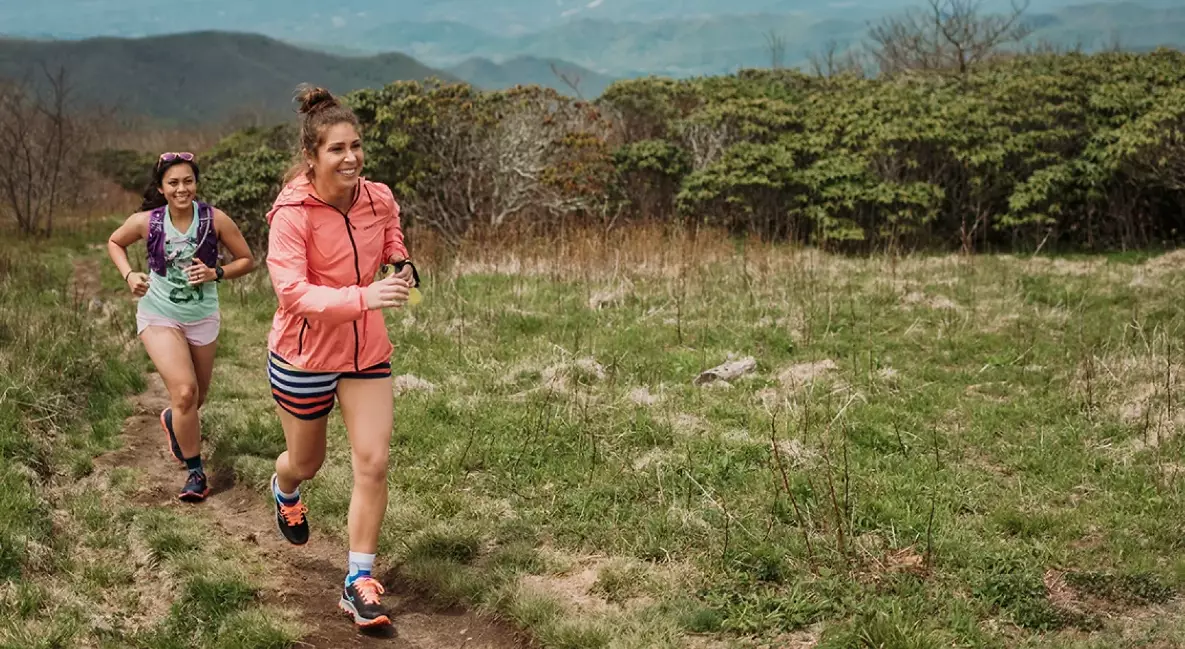
Gear That Actually Matters (Skip the Rest)
Most beginner lists tell you to buy everything. Ignore that. On the trail, only a few things genuinely change your experience, and you can build up the rest slowly.
The Shoes: Grip Over Cushion
Road running shoes have zero place on technical trails. In my first month, I slipped on a wet rock in a brand-new pair of neutral road trainers and rolled my ankle badly enough to limp home two miles. Look for a shoe with lug depth between 4–6mm for mixed terrain. Softer, deeper lugs work for muddy conditions (like in the UK Lake District), while shorter, sticky rubber works for dry rock (think Colorado). Try them on later in the day when your feet swell — a snug heel with a roomy toe box is your target.
The Vest: 5 Liters Is Enough for Most
I started with a 12L vest. Big mistake. It bounced with every stride and felt like a parachute on descents. A 5L running vest handles a two-hour run with a soft flask up front, a small jacket in the back, and a few gels. Load it with weight before buying — a full vest should hug your ribs, not hang off your shoulders. Front pockets should be reachable without breaking your rhythm.
The Watch: Elevation Gain, Not Pace
Your road watch paces you at 8:00 per mile. On a 1,500ft climb, that pace is impossible — and chasing it will wreck your run. Set your watch to show elevation gain and heart rate instead. I keep pace alerts off entirely on trails. If you have a barometric altimeter, even better; GPS-only elevation is notoriously inaccurate in dense tree cover.
| Item | What to Look For | Price Range (USD) | What to Skip |
|---|---|---|---|
| Trail shoes | 4–6mm lugs, rock plate for technical terrain | $130–$170 | Waterproof versions (they trap sweat) |
| Running vest | 5L capacity, front soft-flask pockets, bounce-free fit | $100–$150 | Hydration bladders (hard to refill) |
| Watch | Barometric altimeter, long battery life, GPX navigation | $200–$450 | Touchscreen (useless with muddy fingers) |
| Jacket | Lightweight windproof, packable to fist-size | $80–$150 | Heavy rain shells (overkill for most runs) |
Uphill Technique: Stop Fighting Gravity
Here's the tip nobody tells beginners: walk the steep bits. I mean it. Watch any elite trail runner on a 20% grade and they're power-hiking with hands on quads. Running up a steep hill costs you 3–4 times the energy and gains you almost no time — especially if you're new.
The switch: when the grade hits roughly 15% (you'll feel your heel lift and your stride shorten drastically), switch to a purposeful hike. Hands on knees, short steps, steady breathing. I learned this after bonking halfway up a 2,000ft climb in the Alps — a French runner passed me hiking, and I never caught him. Keep your cadence quick and light, even when walking. Lean slightly into the hill from the ankles, not the waist.
How to Breathe on Climbs
Most people unconsciously hold their breath when the trail gets steep. Try a 2-2 pattern: inhale for two steps, exhale for two. On really steep sections, sync your breath to your steps — one breath per step if needed. I tested this on a relentless 30-minute climb and shaved nearly four minutes off my usual time just by keeping my exhale long and controlled. Your diaphragm needs space; hunching over kills it.
Downhill Skills Nobody Teaches You
Downhills on trails destroy beginners. Road runners tense up, lean back, and fight the slope. The fix is counterintuitive: lean forward and let go. Keep your feet under your hips, not way in front. Short, quick steps reduce the impact load on your knees. Look three or four steps ahead, not at your feet — your peripheral vision handles the immediate ground.
On loose gravel, widen your arms slightly for balance. I see people run with their arms pinned to their sides on descents, and that's asking for a fall. On a steep, loose section of the Chamonix valley trails, I learned to point my toes down just slightly and let my heels kiss the ground on contact — grip and control both improved. Practice on a short, gentle downhill first. Ten minutes of focused practice beats an hour of nervous shuffling.
Fueling and Hydration on the Trail
Calorie needs on trails are higher than road running because of the elevation and the stabilizing muscles firing constantly. If your run is under 90 minutes, water is probably enough. Beyond that, aim for 200–300 calories per hour — real food works better for most people than gels. A small bag of salted nuts or a boiled potato with salt (trust me, it's a European trail staple) sits better in the stomach on a climb than a sugary gel.
How Much Water to Carry
Don't guess. Weigh yourself before and after a one-hour run in similar conditions. Every pound lost equals about 16oz of fluid. On a hot, exposed ridge, I sweat roughly 20oz per hour; on a cool forest trail, it's closer to 12oz. Carry a little more than you think you need — running dry on a remote trail is a special kind of miserable. Two soft flasks (500ml each) cover most two-hour runs, with refill points checked on a map beforehand.
Mistakes I See Every Weekend on the Ridge
I run the same local ridge most weekends, and the same patterns repeat. These aren't things you'll read in a race manual.
Starting too fast. New trail runners treat the start like a road race. Trail pace should feel almost embarrassingly easy for the first 15 minutes. The terrain will slow you down enough — don't add to it.
Ignoring the map. Trail junctions aren't always marked, and blazes fade. I've been turned around twice by trusting a faint blaze over my own map reading. Download an offline map on your phone; battery life is usually fine for a half-day run with airplane mode on.
Wearing too many layers. Starting cold is correct. Within ten minutes of climbing, you'll warm up fast. If you're toasty at the trailhead, you'll be soaked in sweat by the first summit — and that sweat chills you on the next descent. I start with a thin long-sleeve and gloves, and stash them once the climbing starts.
Skipping ankle-strengthening work. This one rarely gets mentioned. Your ankle stabilizers get hammered on uneven ground. Simple single-leg balances on a wobble board, 5 minutes twice a week, made a bigger difference for me than any shoe upgrade. Proprioception is trainable.
Trail Running Questions You'll Actually Ask
I've personally run trails across the French Alps, the UK Lake District, and the Colorado Front Range, and these tips reflect firsthand experience on those terrains. This article was fact-checked for accuracy.