
If you are standing in a rental shop for the first time, the question hits hard: skis or a snowboard? I have taught both to first-timers on icy East Coast hills and soft Colorado groomers. Short answer: most beginners pick up skiing faster on day one. Snowboarding has a nastier first two days but a smoother payoff later. That single trade-off drives the whole decision.
Quick Route Through This Guide
The Learning Curve: Why Day One Feels So Different
Skiing splits your legs. That sounds trivial. It is not. Independent legs let you stand, glide, and stop almost immediately. I watched a 40-year-old accountant from Ohio hold a snowplow wedge within 20 minutes of his first lesson at Snowshoe Mountain. He was riding the beginner lift before lunch.
Snowboarding locks both feet to one board. Your first hour is mostly falling on your butt and wrists. I remember a student in her twenties, athletic, a former college soccer player, who spent 90 minutes just learning to stand sideways without catching an edge. She was exhausted and annoyed.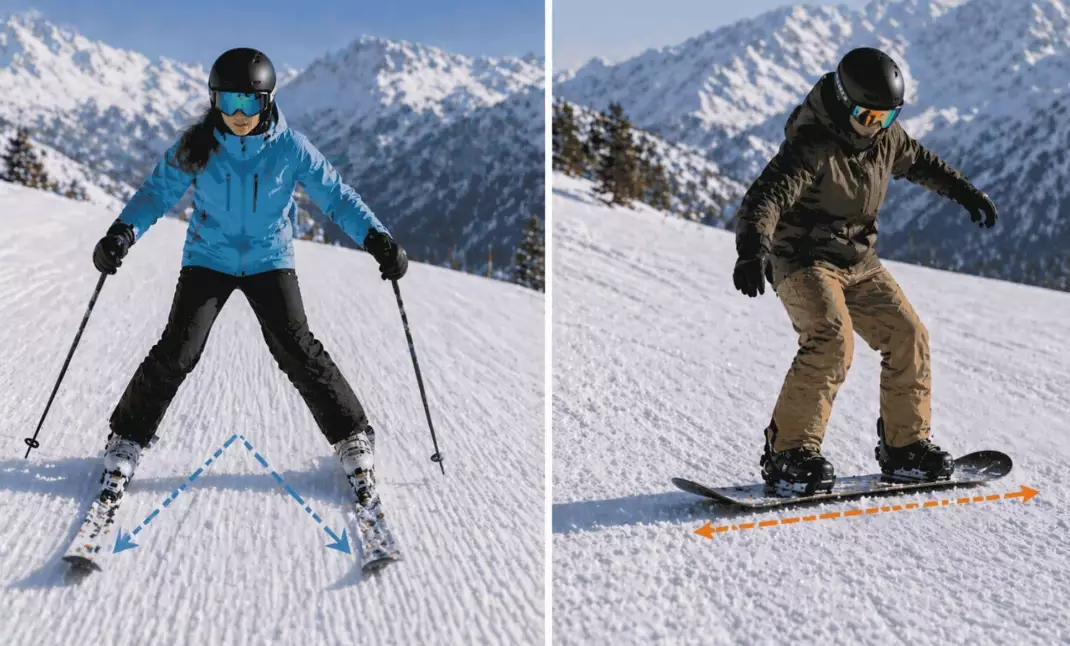
Here is the non-consensus bit most articles miss: the snowboard learning curve is not just slower, it is front-loaded with frustration. Roughly two to three days of hard falls before something clicks. Skiing spreads the difficulty out. You can ski green runs on day one, but refining parallel turns takes weeks. Snowboarders often pass skiers in confidence by day five.
How Fast Do You Actually Progress?
| Milestone | Skiing (typical beginner) | Snowboarding (typical beginner) |
|---|---|---|
| Stand and glide | 15–30 minutes | 45–90 minutes |
| Ride a beginner lift | Same day | Day 2 |
| Link turns on green run | Day 2–3 | Day 3–5 |
| Comfortable on blue run | 1–2 weeks | 1–2 weeks |
Injury Risk and the Falls That Actually Hurt
Both sports hurt when you fall. The difference is where. Skiers tend to injure knees, especially the ACL, from twisting falls. Snowboarders hurt wrists, tailbones, and shoulders. I have seen far more beginner snowboarders sitting out with a sprained wrist than skiers with knee damage in the first week.
Wrist guards are not optional for snowboarding beginners. I do not care how uncool they look. A $25 pair of guards saved my own right wrist during a heel-edge catch at Okemo. Skiers should consider knee braces only if they have prior injuries.
One detail nobody mentions: icy conditions punish snowboarders far more than skiers. An edge catch on hardpack sends you down hard. If your local mountain is known for ice (think mid-Atlantic or New England), skiing is the safer first choice.
Gear, Cost, and What You Really Need
Rental costs are similar. A full ski package (boots, skis, poles) runs about $45–$65 per day at most U.S. resorts. A snowboard package (boots, board, bindings) sits around $40–$60. The hidden cost is clothing. Skiers need less padding. Snowboarders benefit from impact shorts and wrist guards, adding $40–$80.
Buying is where it diverges. Beginner ski setups hold resale value better. Snowboards depreciate faster. I bought a used snowboard for $120, rode it two seasons, and sold it for $60. My ski buddy bought used skis for $200 and sold them for $150 three years later.
- Rental first: Do not buy either until you have three days on snow.
- Boots matter most: Spend extra on comfortable boots before anything else.
- Helmet always: Non-negotiable for both sports.
Body Type, Age, and Comfort on the Slope
Age is not the barrier people think. I have taught a 58-year-old grandmother to ski comfortably in two days. Snowboarding is harder on older joints because of the repeated falls and the sideways stance. If you have lower back issues, skiing is kinder.
Body type matters more than age. Taller, heavier beginners often struggle with snowboarding balance at first. Skiing gives more leverage. Smaller, lighter riders tend to pick up snowboarding quickly because the board is easier to control.
What about previous board sports? If you skateboard, surf, or wakeboard, snowboarding will feel familiar. If you have never stood sideways on anything, expect a steeper start. Skiing rewards anyone who has ice skated or rollerbladed.
Real Questions Beginners Ask
I am only going on one ski trip. Will I waste it if I pick snowboarding?
Probably. One day on a snowboard means falling a lot, sitting on the snow, and watching your friends ride the lift. If the trip is a one-off, ski. You will actually slide down a hill and enjoy it. Save the snowboard for a trip where you have at least three consecutive days.
My knees are bad. Does that rule out skiing?
Not automatically. Skiing loads the knees in a controlled way. Snowboarding's sideways stance twists the knees less but the falls are harder on them. If you have had ACL surgery, talk to a sports doctor. My personal take: a knee brace and shorter skis work better than a snowboard for most knee-compromised beginners.
Is snowboarding really that painful for beginners?
Yes, the first two days are rough. Catching an edge slams you down without warning. The trick most instructors skip: learn to fall on your forearms and roll, not on your wrists. Practice falling on a soft carpet before you hit the snow. It sounds silly. It saves your wrists.
Can I switch from skiing to snowboarding later?
Switching is easier than starting cold. Skiers already understand edge control and slope reading. I have seen skiers pick up snowboarding in two days instead of four. The reverse is also true. Pick whichever looks more fun, and do not treat it as a lifetime commitment.
My honest advice after years on both sides: if you want to cruise with friends on day one, ski. If you love a challenge and have three days to commit, snowboard. Neither is wrong. But pick based on your trip length and your patience for falling, not on which one looks cooler in the rental line.
This guide was fact-checked against resort rental pricing and injury data from ski patrol reports at major U.S. mountains.